
Most people meet this question the same way. You’re holding a menu, you see both tequila and mezcal, and you’re trying to decide what you actually want in your glass.
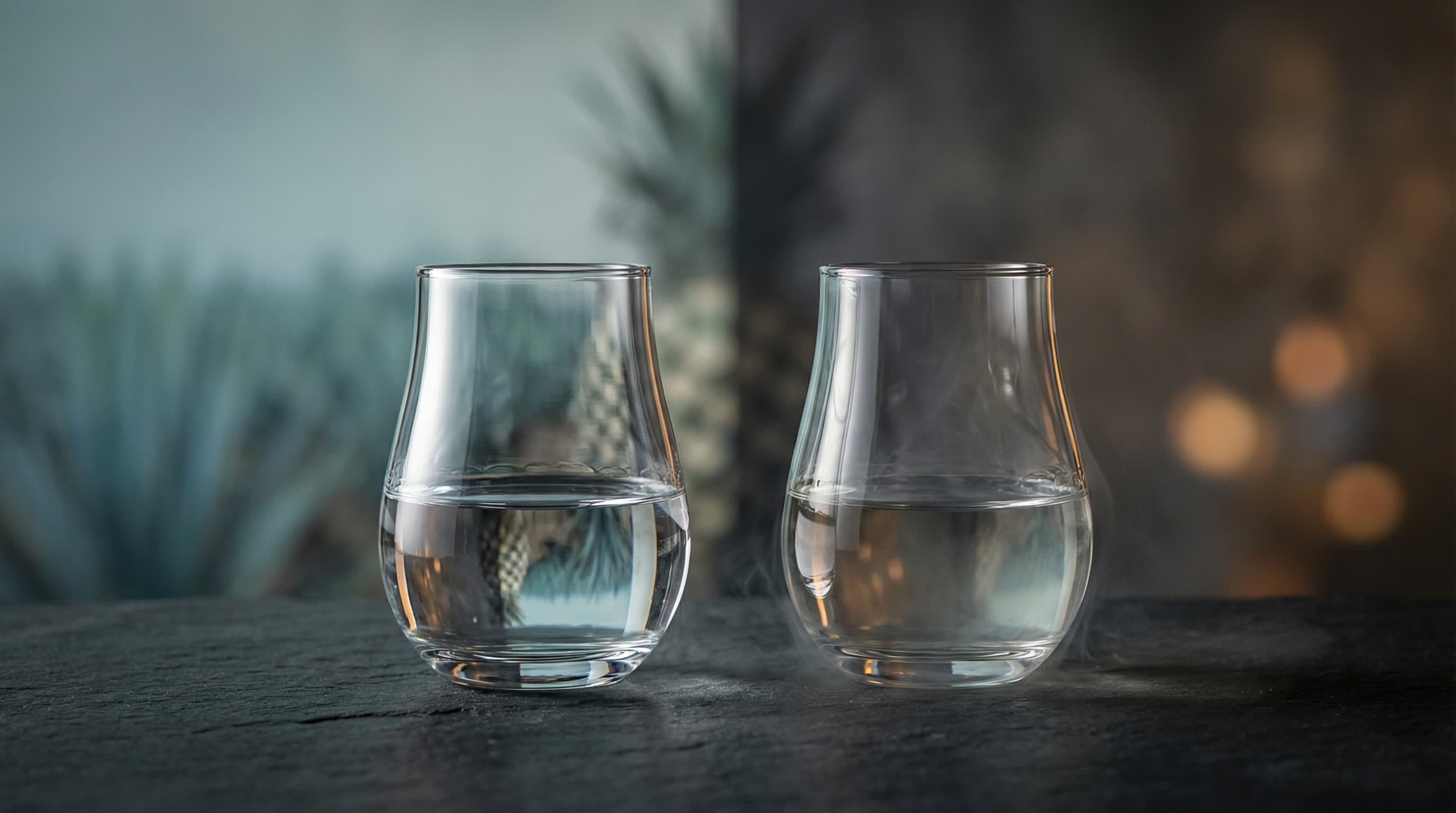
Here’s the truth: tequila and mezcal are not interchangeable. They come from different agave plants, different regions, and different production traditions. They also taste different in ways that matter, especially once you start sipping them side by side.
I wrote this to make the difference clear without turning it into a textbook. We’ll cover what they share, where they split, what the labels really mean, and how to choose the right spirit for sipping or cocktails.
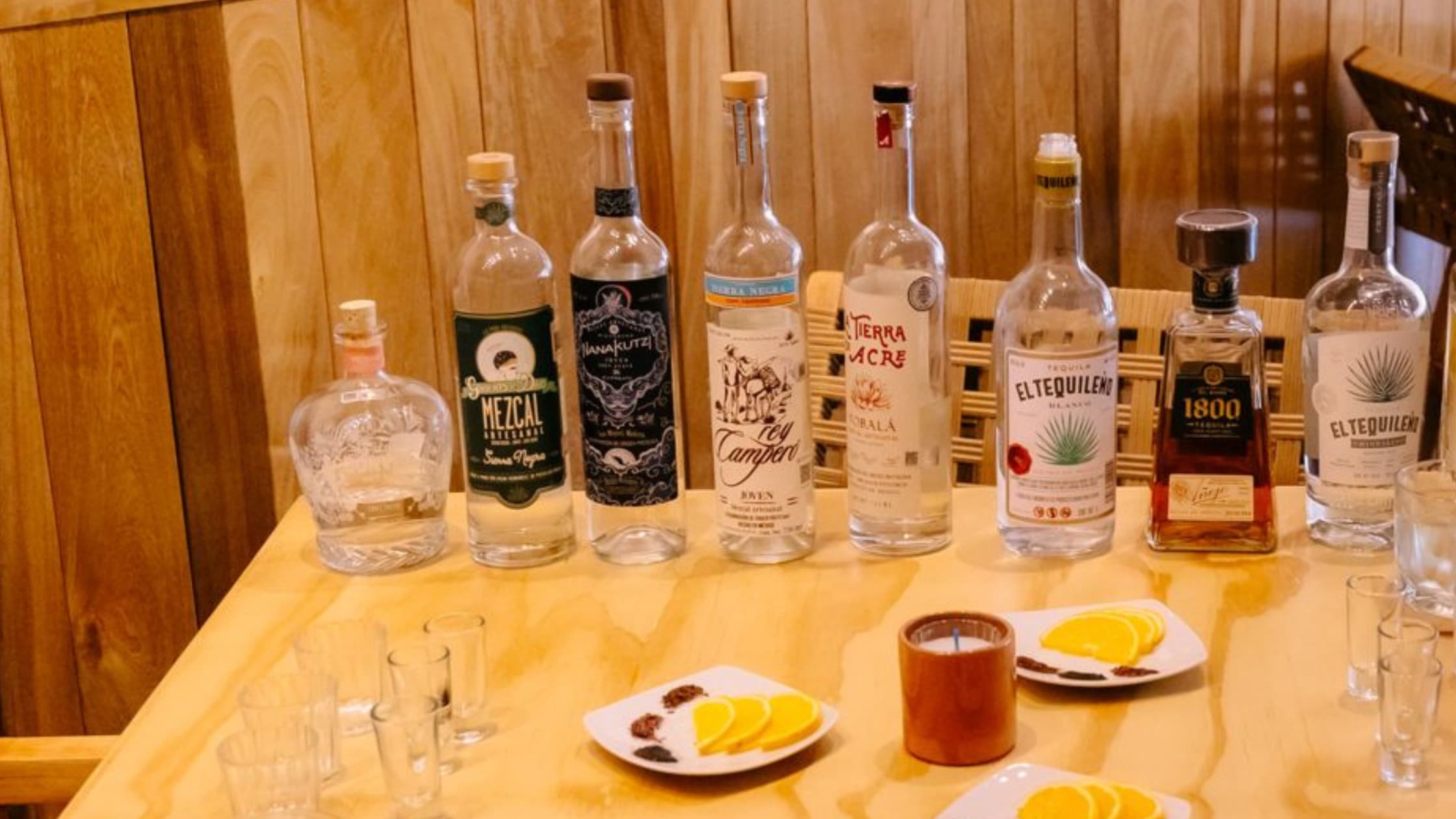
If you’re coming to Los Cabos and you want to taste the difference in a way that clicks fast, this is exactly what we do in our guided sessions at Agavia.
What is the difference between tequila and mezcal?
Tequila is made exclusively from blue Weber agave, primarily in Jalisco, and the agave is typically steam-cooked before fermentation and distillation. Mezcal can be made from many different agave varieties across multiple Mexican states, and the agave is often roasted (commonly in earthen pits), which can create smoky, earthy flavors. All tequila is a type of mezcal in the broad historical sense, but not all mezcal is tequila.
What do tequila and mezcal actually have in common?
They do share a foundation.
Both are Mexican spirits distilled from agave. Both start with a mature plant, harvested for its heart (the piña). Both involve cooking the agave, fermenting it, and distilling it. And both can show a very specific sense of place, especially when the producer is thoughtful.
Where the relationship gets confusing is the umbrella idea.
People often say, “All tequila is mezcal.” That’s a useful way to understand the family tree, but it’s not how you’ll experience them at the bar. In real life, tequila and mezcal are regulated and produced as distinct categories, and they behave like different spirits when you taste them.
If you remember one thing from this section, remember this: they share a plant family, not a flavor identity.
Where does the difference between tequila and mezcal begin?
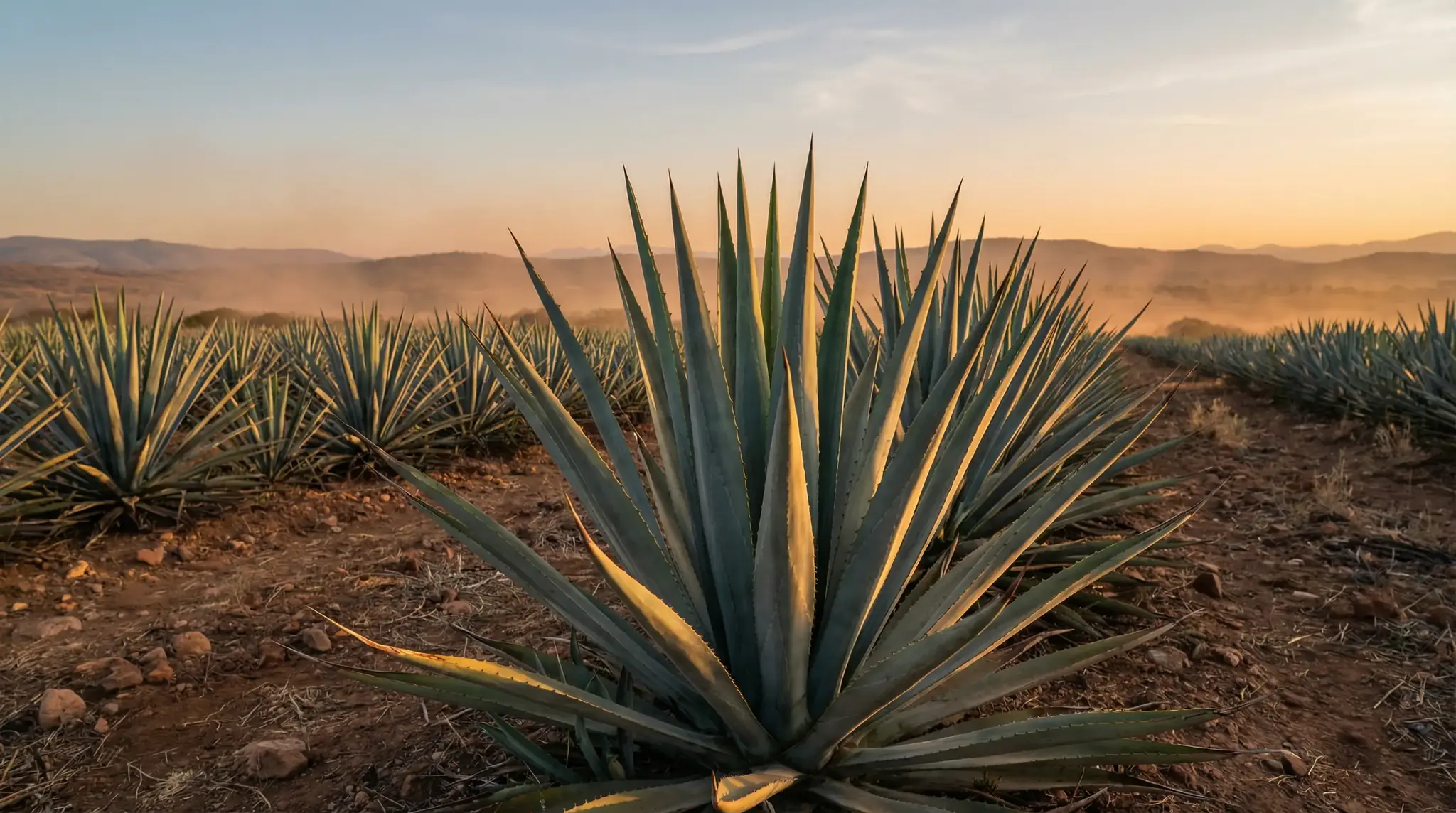
It begins with the agave.
Tequila agave: one variety only
Tequila is made from blue Weber agave (Agave tequilana Weber azul). Full stop. If it’s tequila, it’s blue Weber.
That single rule shapes everything: flavor consistency, supply chain, and why tequila can be produced at large scale.
Mezcal agave: many varieties, many personalities
Mezcal can be made from many agave varieties. You’ll often see the agave type listed on the label.
A few you’ll run into:
- Espadín (Agave angustifolia): the most common, approachable, and widely cultivated
- Tobalá (Agave potatorum): often smaller yields and more floral, can be complex and delicate
- Tepeztate (Agave marmorata): intensely aromatic, often wild or semi-wild, typically a long maturation
- Cuishe, Mexicano, Tobaziche: regionally specific names you’ll see often in Oaxaca and beyond
Agave variety does not just change taste. It changes cost, availability, and how sustainable a bottle is, depending on how the agave is sourced and grown.
If you’re buying mezcal and the label tells you the agave species, that’s a good sign you’re being invited into the details.
How are tequila and mezcal made differently?
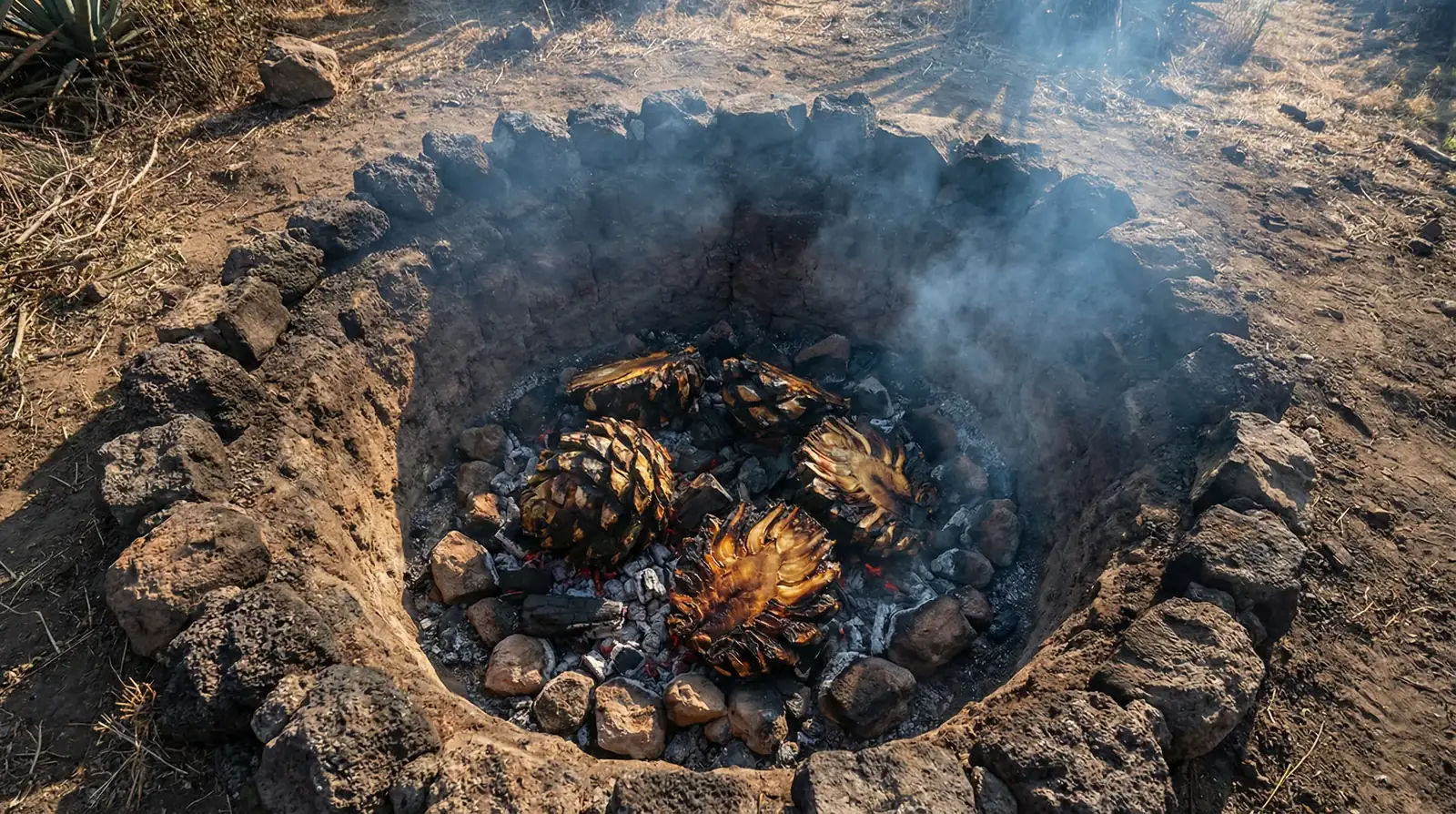
Once you understand the cooking step, most of the flavor differences make sense.
Typical tequila production (simplified)
- Blue Weber agave is harvested by jimadores
- The piñas are steam-cooked in ovens or autoclaves
- Cooked agave is shredded and the juice is extracted
- Fermentation happens, often in controlled tanks
- Distillation is typically done twice
- The tequila is bottled as blanco or aged into reposado, añejo, or extra añejo
Tequila can be made traditionally or industrially. Both exist. The category allows a wide range of methods, and that’s why two tequilas can taste wildly different even before you get to aging.
Traditional mezcal production (simplified)
- Agave is harvested at maturity (often older than tequila agave, depending on the variety)
- The piñas are roasted, commonly in underground pits with hot stones and wood
- Roasted agave is crushed, sometimes with a tahona stone wheel
- Fermentation often happens in open-air vessels, and can use ambient yeast
- Distillation is typically done twice, sometimes in copper or clay stills
- Many mezcals are bottled as joven (unaged) to show the raw character
That roast step is the fork in the road.
When you roast agave with wood and earth, you can create smoke, but you also create deeper caramelization and earthy aromatics that steam cooking doesn’t produce in the same way.
One important note: not every mezcal is heavily smoky. Smoke is a style outcome, not a guarantee. Producer choices matter.
Tequila vs mezcal taste: what does the difference feel like?
This is the part most people actually care about, and it’s easiest to see in a table.
| Tequila | Mezcal | |
|---|---|---|
| Core impression | Clean, bright, herbal, mineral | Earthy, aromatic, layered |
| Smoke | Typically none | Can be low to high |
| Sweetness | Can show more vanilla and caramel with aging | Less about sweetness, more about structure and aroma |
| Finish | Often cleaner and shorter | Often longer and more persistent |
| Body | Light to medium | Medium to full |
| Agave expression | More consistent (one agave) | Highly variable by species |
| Best served | Neat, on ice, or in cocktails | Neat, or with citrus and salt as a palate guide |
| Typical ABV | Varies by bottle | Varies by bottle |
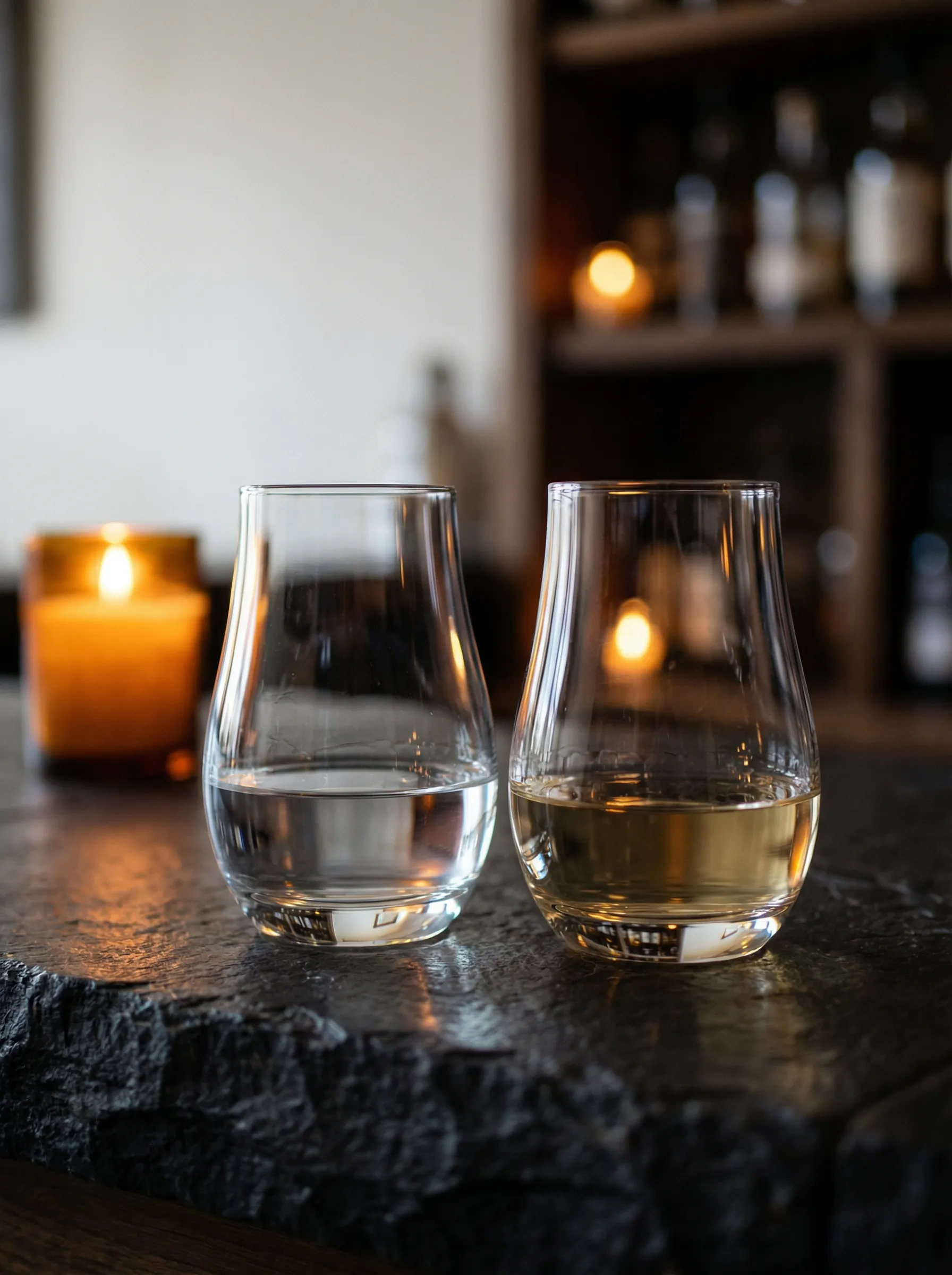
If you’ve only tried one mezcal and it tasted like a campfire, don’t write the category off. I see that happen all the time.
Some mezcals are smoky. Some are floral. Some are green and herbal. Some lean tropical. The range is the point.
Is mezcal stronger than tequila?
Not as a rule.
Both tequila and mezcal commonly live in a similar ABV range. What matters is the specific bottle.
What can happen is that mezcal feels stronger because the aromatics are more intense and the finish lingers. If a mezcal is bottled at higher proof, you’ll feel that too, but that’s a producer decision, not a category requirement.
Quick label tips I use
- Check the ABV before you pour. Anything higher proof is a slower sip.
- For tequila: blanco is unaged; reposado and añejo add oak influence.
- For mezcal: joven is unaged; you may also see reposado or añejo.
- If a mezcal label includes the agave species and a lot/batch reference, it usually means you’re looking at something made with more intention.
Mezcal vs tequila for margaritas: can you swap them?
Yes, and it’s one of my favorite ways to introduce mezcal to someone who’s unsure.
A mezcal margarita usually comes out smokier and more savory, with more depth behind the citrus. The salt and lime interact differently with mezcal’s earthier base.
Practical rules I follow behind the bar
- Use a joven Espadín for mixing. It’s approachable and it won’t overwhelm the drink.
- Don’t use your rare bottle for cocktails. The nuance gets flattened.
- If you want a bridge, do 50/50 tequila blanco and mezcal. You get complexity without full commitment.
A clean mezcal margarita ratio
- 2 oz mezcal
- 1 oz fresh lime
- 0.75 oz orange liqueur
- Salt rim, rocks, good ice
If you’re new to mezcal, this is often the easiest “yes” because the citrus rounds the edges.
What is mezcal made from, exactly?
Mezcal is made from agave, but the detail that matters is which agave, and where it grew.
If you’re shopping for mezcal, the label can tell you a lot in a few seconds:
- Agave species (Espadín, Tobalá, Tepeztate, etc.)
- State and sometimes the town where it was produced
- Sometimes the maestro mezcalero name
- Sometimes a batch or lot reference
When you see those details, you’re usually seeing traceability. That’s a good sign.
When a label is vague, it doesn’t automatically mean the mezcal is bad, but it does mean you’ll want to set expectations. Mezcal is a huge category, and the best bottles tend to be very proud of their specifics.
Regions that matter: tequila vs mezcal
Geography shows up in both spirits, but mezcal tends to broadcast it more loudly.
Tequila regions (what you’ll hear most often)
- Highlands (Los Altos): often brighter, more floral and mineral
- Lowlands (near Tequila): often earthier, sometimes more herbal
These are broad strokes, but they can be helpful as a starting point.
Mezcal regions (a simple map for your brain)
- Oaxaca: the biggest and most diverse mezcal landscape, with many styles
- Guerrero: often herbal and mineral, with distinctive agave varieties
- Durango: often more delicate and floral, depending on the producer
- San Luis Potosí: distinctive profiles you don’t confuse with Oaxaca
- Other producing states: each with their own local methods and agave types
Here’s the shortcut I give guests: if a mezcal tells you the region, the agave, and the producer, you’re not just buying “mezcal.” You’re buying a specific place.
Common mistakes people make when comparing tequila and mezcal
I see these patterns constantly, and they’re easy to fix once you notice them.
1) Assuming all mezcal is smoky
Smoke is a common outcome of roasting, but it’s not a universal flavor profile. Producer choices matter, and some mezcals are surprisingly delicate.
2) Treating “100% agave” as equal across categories
For tequila, “100% agave” still means blue Weber.
For mezcal, the agave variety can change everything. Start reading the agave type the way you read grape varietals in wine.
3) Choosing mezcal based on price alone
Mezcal is labor-intensive and often small-batch. There’s a real cost floor for bottles made traditionally. If a bottle is extremely cheap, ask why.
4) Mixing your best mezcal into cocktails
If you love it neat, keep it neat. Use a good mixing mezcal for margaritas and palomas.
5) Ignoring the label details that actually matter
For mezcal: agave species, region, and producer details are gold.
For tequila: knowing the style (blanco vs aged) and how it behaves neat vs in cocktails goes a long way.
How to tell tequila and mezcal apart in under a minute
If you’re staring at a menu or a bottle shop shelf, here’s my fast process.
Step 1: Look for the agave variety
If it’s tequila, it’s blue Weber. Mezcal will often list a different agave.
Step 2: Look for the region
Tequila is tied closely to Jalisco and approved surrounding regions. Mezcal will list a producing state like Oaxaca, Guerrero, or Durango.
Step 3: Smell before you sip
Tequila often reads clean and herbal. Mezcal often reads more earthy and aromatic, with smoke anywhere from subtle to bold.
Step 4: Take a small sip and wait
Tequila often finishes cleaner. Mezcal often lingers longer and changes as it sits.
Step 5: Decide what you want tonight
Clean and bright? Start with tequila blanco.
Earthy and layered? Start with mezcal joven.
Oak, warmth, dessert notes? Reach for reposado or añejo.
Two ways to learn this fast at Agavia
Reading helps, but tasting is where it actually clicks.
Taste the difference in person
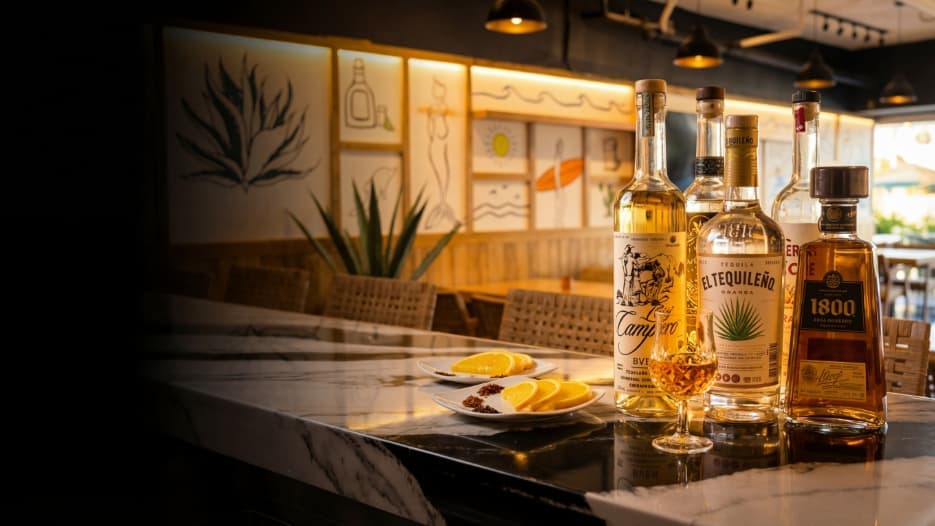
If you want a clear, no-pressure way to understand the difference between tequila and mezcal, come taste them side by side with us. We build our flights to show contrast on purpose.
You can see our tasting times here: /tasting.
Ready to go deeper?
If you want the deeper version, our Signature Masterclass is designed for exactly this topic: tequila and mezcal in the same sequence, with the context that makes the flavors make sense.
Take a look here: /experiences/agave-tasting-mixology-masterclass.
If you want the broader planning guide for Los Cabos tastings, For the full Los Cabos overview, I keep this updated: /blog/tequila-mezcal-tasting-los-cabos-guide.